|
|
BFIT Hosts Second Annual Green Day Symposium
|
|
|
|
|

Updating...
Clean Energy Leader delivers keynote at Benjamin Franklin Institute's Second Annual "Green Day"
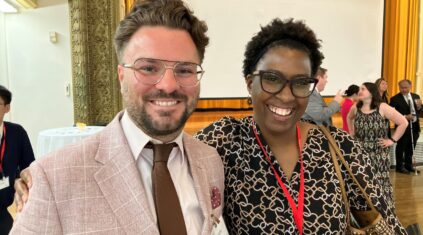
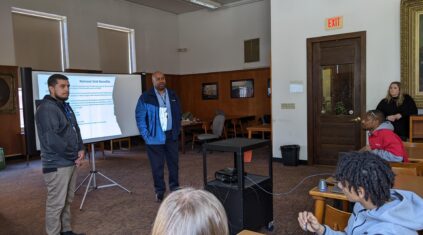
BOSTON – Marybeth Campbell, Workforce Development Program Director at the Massachusetts Clean Energy Center, was the keynote speaker at Benjamin Franklin Institute of Technology’s second annual “Green Day,” to be held on Thursday, October 29th at the Institute’s campus on Berkeley Street in Boston’s South End.
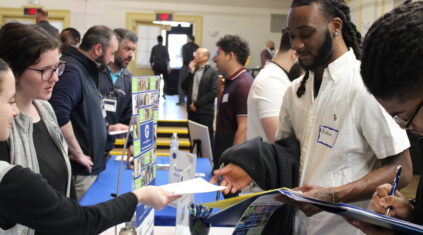
Ms. Campbell’s presentation took place at 11 a.m., followed until 1 p.m. by an energy fair, which will feature representatives from organizations including the Green Roundtable that that utilize green and sustainable practices.
Marybeth Campbell has ten years experience in government, public policy, public education and project management in the energy sector. In her current position, she works with higher education, vocational schools, and community-based nonprofits to develop training and workforce capacity that supports the Commonwealth’s growing clean energy industry.
Green Day will enhance Benjamin Franklin (BFIT) students’ understanding of the growing role that green and sustainable practices are playing in a number of industries, and help connect the students with the fast-growing “green jobs” market.
BFIT plans to “green” many of its programs in response to the growth of sustainable technologies. For example, the Institute recently introduced a program in photovoltaic installation and design, and is planning to offer selected courses in hybrid automotive technology.
Green Day also served to highlight the importance of responsible citizenship, which was a central feature of Benjamin Franklin’s own life. BFIT traces its founding and educational mission back to a bequest from Franklin.
Though best known as an inventor and one of our nation’s founding fathers, Franklin was also an early environmentalist. In 1739, he led a group that petitioned the Pennsylvania Assembly to exclude tanneries and stop the dumping of waste in Philadelphia’s central commercial districts.
During the 1760s, Franklin led a commission that regulated waste collection and water pollution levels in Philadelphia. In addition to the bequest that led to BFIT’s founding, provisions in his will also helped establish the Philadelphia Water Commission and set up the construction of a pipeline to bring fresh water into the city. Franklin’s idea that the public’s right to health and happiness should supersede the private pursuit of wealth was embraced less than 40 years later when the United States declared its independence.
|
|
|
|
|
|
|